• 4Rs Tip for 02.19.2023 – How to Build a Lifestyle of Reuse and a Circular Economy

    February 19, 2023
    sustainability

    4Rs Tips for 02.19.2023 – How to Build a Lifestyle of Reuse and a Circular Economy

    Build habits that support Reuse in everything you do with these helpful ideas.

    How we use, and Reuse, materials has become one of the most critical issues in our environmental impact as humans. We can not continue the one-way street our materials are on. We need to work toward a circular path for everything we use.

    Our Disposables Issue

    The biggest culprit in our waste crisis is single-use plastics. It seems everything is packaged in them in order to make life convenient, even if that means more trash than necessary.

    • While we’re focusing on Reducing the number of disposables we use, see my last post on 3 Ways to Reduce: A Return to Basics, we also need to learn how to Reuse the disposables we already have or can’t avoid buying.
      • Though most disposables can go in recycling, putting them in the bin doesn’t mean they get recycled, especially plastics. 
      • If we can find Reuses for disposables we eliminate emissions from processing and transportation caused when we recycle or dispose of them.

    With the internet at our fingertips, we can find ways to Reuse just about anything, including my favorite idea on how to Reuse plastic juice bottles.

    Reuse Juice Bottles as Travel Size Snack Containers

    If you regularly buy single-serve juices, please don’t buy the kind in a pouch. Pouches can’t be recycled or Reused. Buy plastic bottles that have a number of Reuses.

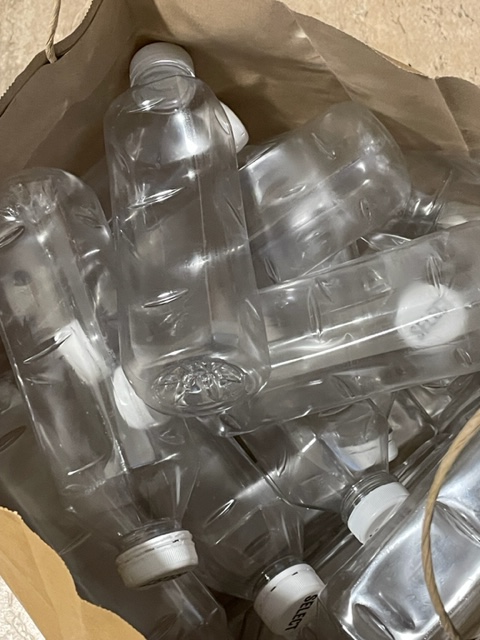
    I have a favorite aloe juice I enjoy that only comes in single serve. I’ve started washing and saving the bottles. I’m planning a writing retreat in the wilderness and having these lightweight bottles to carry trail mix in will be perfect.
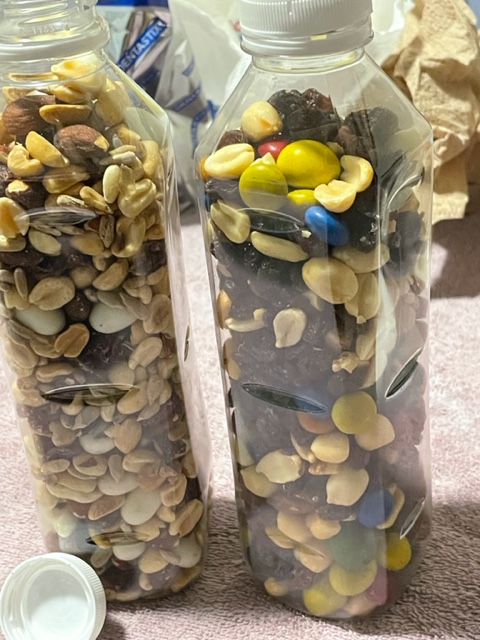
    Reusing plastic containers has a significant impact
    on reducing waste and emissions.

    We need to look at the trash we generate and think about ways to Reuse it and avoid emissions and landfill waste caused by throwing it out.

    It all comes down to what we do with disposables and
    unwanted durable goods

    Start looking at every item you touch and think, what will happen with this when I’m done with it?

    • If you have plastic bags (it’s okay, we all end up with a few even if we have Reusable shopping bags or food storage bags).
      • Handy Reuses for plastic bags.
        • They’re great for carrying lunches.
        • Line small trash cans with shopping bags.
        • Find crafts you can make with them.
        • Look for ways to use them in your garden.
      • Even disposable food storage bags, like zip-close bags, can be used over and over.
        • I have some I’ve been washing and Reusing for years.
      • Save the bag your bread comes in for lunches.
        • Use them to carry sandwiches or chips. 
        • They’re made to keep your bread fresh and work great for other foods.
    • Drink like an Ultimate Reuser. Way too many people use disposable beverage containers on a daily basis.
      • Carry a Reusable hot beverage mug, and water bottle.
      • Don’t drink bottled water – we need to stop this plastic use.
        • Bottled water isn’t healthier. A home water filter is better, and cheaper.
      • Participate in bottle deposit laws if you have them available. This is the best way to guarantee the container gets recycled.
        • Over 40 countries and regions have bottle deposit laws.
          • Over 90% of beverage containers get recycled in some of these regions.
          • When surveyed, people using them like that they have it available.
        • Whether you need the money or not, turning in beverage containers for the deposit you paid is the best way to make sure they get recycled.
        • You can give them to people who need the money.
          • I have a friend who lives in a walk-up in the city; she leaves her bottles on the sidewalk at her entry for the homeless people. 
          • I give mine to my neighbor who is a low-income senior and uses them to pay her bills.
    • Buy beverages in aluminum cans. It can be recycled repeatedly and does more to support a Reuse economy than any other material.
      • Plastic can only be recycled once if it even gets recycled.
    • If you can’t avoid buying them, get creative with ways to Reuse disposables.
      • I love that you can make landscaping bricks from plastic bottles. How cool is that!

    Though we can’t control how businesses package our food or goods, we can support organizations by helping them move to Reusable packaging.

    • We need to support organizations like Upstream Solutions. They develop Reuse programs and bring us The Reusies, among other things like fighting for environmental justice and a circular economy.

    A circular economy, where economic growth comes from the continuous use of already mined materials, depends on us developing a Reuse Mindset. Not only with disposables but with everything we buy and use.

    Non-Disposable Items Should Be Reused and Repurposed

    Even if something can’t be repaired, the materials can likely be captured and Reused to make something else, a.k.a. Recycled. Metal, for example, is too precious to send to landfills when we have so much demand for it.

    • Repairing things that have stopped working is the first choice we should make.
      • One of my favorite newsletters is from GoingZeroWaste.com. It’s full of great tips, like this article on Reuse and repair: 4 Things You Should Know How To Repair.
      • Even if you don’t want to keep an item, why not repair and donate it for someone else to use?
        • The value of investing your time shows up through the people helped in your community.
        • Donate to thrift stores that help people in need.
          • It’s a tax write-off, ya know.
    • We need to get better at Reusing computers and digital equipment. Electronics end up in landfills at an alarming rate. Because most of them contain at least one or two precious metals, it’s important we Reuse and Recycle them.
      • There are millions of people globally who don’t have access to a computer. Your used equipment can change that.
        • Check out the 10 Best Charities for Tech & Computer Recycling from Impactful.Nina.
    • If you can’t repair it, get online and find out where you can recycle it. Very few things can’t be recycled, we just need to get them in the right hands.
      • My favorite database of resources to find where to recycle just about anything is Earth911.com.
    • Another one I’ve found useful is RecycleNation.com.

    Why It’s Important

    One of the best ways to significantly Reduce waste on our planet is with solid Reuse habits. This needs to happen before we send materials off to hopefully be broken down and turned into something else through recycling.

    • The process of recycling causes emissions. So reusing materials before they leave your home is a lot better than putting them in a recycle bin.
    • Reuse is better than recycling because recycling doesn’t always work.
      • Most regions are really behind on having the facilities to recycle disposables.
    • When it comes to durable goods, finding the right way to Reuse or recycle them is really important because we need the materials to make more goods.
      • Nearly every item you own can be donated to make more furniture, computers, or gadgetry. 
      • This is how we build the circularity of our materials.
    • When we sell our used goods in our community we eliminate most emissions from transportation and manufacturing, and we positively affect our neighborhoods.
      • Donating goods to a charitable thrift store is a great way to do this.

    With Much Gratitude

    That’s it for this issue. I’ll be continuing my bi-weekly schedule of gathering tips to share with you on how to Reduce, Reuse, and Rethink Recycling. So, see you in two weeks. 

    If you like this post, please forward it to every earth-friendly human you know. 

    If you like this blog and find it helpful, please consider supporting my continued work here.

    Drop me a line anytime if you have questions or comments. I love hearing from you.

    Thank you for reading these tips and subscribing. Pat yourself on the back for doing your part. Remember, everything helps.

    We’ve got this!

    All my best,
    Jen
    jen.thilman@gmail.com 
    Sign-up to receive these weekly 4Rs posts

    By clicking submit you agree to share your email address with the site owner and Mailchimp to receive marketing, updates, and other emails from the site owner. Use the unsubscribe link in those emails to opt out at any time.

    Processing…
    Success! You're on the list.
    Whoops! There was an error and we couldn't process your subscription. Please reload the page and try again.

    No comments on 4Rs Tip for 02.19.2023 – How to Build a Lifestyle of Reuse and a Circular Economy
  • 4Rs Tip for 02.05.2023 – 3 Ways to Reduce: A Return to Basics

    February 5, 2023
    sustainability

    4Rs Tips for 02.05.2023 – 3 Ways to Reduce: A Return to Basics

    Hello planet lovers. I hope you missed me. I’ve missed you! I took a break while I started a new job and had to relocate. I was also busy finishing edits to my book on recycling, which I will share a link to once it’s published. 

    This being the one-year anniversary of my first 4Rs post, I felt it was a good time to restart. So, like any good thing, we hope to see again, my 4Rs blog has returned. And so I want to talk about “returning” or, more specifically, A Return to Basics and how it can Reduce our impact on the planet.

    Returning to basics can simplify your life and 
    contribute to a healthier, happier world.

    A happy planet means we are all healthier.
    It increases our opportunities for happiness.

    Let’s tweak those habits!

    Wouldn’t it be great if there were a few changes you could make in your daily life that would help the environment? Good News! There Is! 

    There are THREE AREAS in life where changing how we do things can reduce waste and global warming significantly. And it often takes simple adjustments and little effort.

    You may find some changes easy to make; some may be hard. 
    Start with the easy. Stick with it.

    I like starting with the easy, feeling the reward from doing that – sometimes actually giving myself a reward – and then once I’ve solidified a change into a habit, challenging myself to add tougher changes. 

    So here we go, use these ideas to find things you can implement in your life. Start now. Don’t just think about it, write them down. 

    • Code them as Easy, Kind of Hard, and Really Hard. And get to work checking off the list.

    The 3 Key areas where humans contribute to the waste crisis are:

      • How we shop,
      • how we eat, and 
      • the packaging we use.

      1 – Rethink your buying habits. Stop and ask yourself why you’re buying something.

      • If the answer is because you feel like it, there’s a good chance the item will end up in the trash in the not-too-distant future.
        • If you enjoy retail therapy, change to browsing thrift stores. You’ll find treasures and eliminate the impact of manufacturing from the cost of your purchase.
      • We’ve been trained by the media to over-shop. Commercials tell us we should buy crap we don’t really need.
        • As much as 80% of items made are thrown out within six months. 
        • Over half of the greenhouse gas emissions are caused by factories and manufacturing.
      • Reducing how much you buy can simplify your life.
        • The obvious: you save money.
        • The not-so-obvious: the less you have in drawers, closets, cupboards, and storage lockers, the less time you spend figuring out what to do with it or paying for the space.
          • Donate good-condition clothes and household items that you don’t use.
            • Most thrift shops are non-profits that benefit people in need. 
            • There’s one near me, Hope Thrift, that benefits disabled people.
              • Great book selection.
            • Goodwill employs and supports people who need help getting back on their feet.
              • Goodwill Finds is their online store for buying good quality used items, especially clothes.
          • Cut up worn-out clothes to make cleaning rags or crafts.
            • I’ve found hundreds of craft ideas online for reusing old materials.
        • Rent tools instead of buying ones you won’t use regularly.
      • Stay away from fast fashion and cheaply made goods that aren’t made to last.
        • Good quality clothes can be donated and used by someone else, but shitty ones can’t.
        • Buying used clothes and goods is cheaper and better for all of us.
          • My blender is a good glass one I paid $5 for a year ago at Goodwill. Cha-ching! 
          • Two great benefits of shopping at thrift shops; you get the good feeling of helping the planet and other people, and both your purchases and your donations are likely a tax write-off.

      The effort you put into minimalizing your lifestyle will reward you with a better life in the future. You’ll be amazed what reduce can mean to your productivity.

      Let’s work on owning only what we need and use

      Tiny houses are based on the idea that you should only have in your home what you really need. I don’t know about you, but that sounds pretty simple to me.

      2 – How you eat makes a big difference. Not only what you eat but where you eat has an impact on the planet.

      • Over a third of adults in America eat fast food daily. I’m not saying we stop eating fast food and take-out (I do it; it’s too darn convenient). I’m saying we need to pay attention and cut back in order to reduce waste. A few decades ago fast food was a treat you ate once in a while.
        • Most fast food and take-out containers are not recyclable.
          • Even plastics with a symbol have little chance since plastics don’t easily recycle.
            • Avoid plastics; go with coated paper that will break down easier.
          • The paper bag is often the only thing that can be recycled unless that gets greasy.
        • Ge reusable straws. Then you can say “no” to the straw at the drive-thru.

      If I find I’m doing drive-thru or take-out too often, which happens since I’m working two jobs, I start to track it on my wall calendar. Marking it down at the end of each day makes me rethink hitting a drive-thru on a busy night. It makes me pay attention so I minimize my waste.

      • When you track how often you eat out and how much you spend, you’re encouraged to put time into meal planning and having ways to make quick meals when you get home late on a busy day.
        • Keep track on a calendar or notebook of how many times you get fast food or takeout during the week. Record it at the end of each day so you don’t forget.
        • Review your bank spending and add up all you spent on take-out and drive-thru.
        • Then work on cutting it down by 2-3 meals the next week. Find substitutes for those convenient, unhealthy meals. You’re smart. You can think of ways to fit that into your schedule. If I can do it, you can 🙂
          • Take leftovers or cans of soup for lunch. Keep a spoon and microwave bowl at work so you can wash and reuse them.
          • Prepare big meals on the weekends with lots of leftovers you can reheat for lunch or dinner throughout the week.
            • Don’t let those leftovers go bad. Put a reminder in your phone if you have to.
        • Pay attention to how much you’re reducing trash. This is a huge encouragement for me.
          • A great reward for me is seeing on my calendar that more than ten days have gone by since I’ve taken out trash or recycling. Keeping track of my waste feels good. It encourages me to skip trips to the drive-thru.

      One-third of all food goes to waste each year creating methane emissions as it rots in landfills. Methane is the most damaging greenhouse gas we emit. We need to get better at eating our food and composting what we don’t eat.

      • Impulse buys at a grocery store can be very damaging.
        • If you don’t stick to your list or meal plan for the week, you are more likely to buy foods that will go bad before you eat them.
      • Some foods make a bigger difference in greenhouse gas emissions.
        • Livestock, mostly cows, and their manure emit methane. 
        • Beef and dairy consumption is one of the leading causes of deforestation, which releases carbon dioxide and causes warming temperatures.

      3 – Disposable packaging can be controlled. We have choices and we have a voice.

      • The first step is reducing single-use items. Change your eating habits with the tips in Step 2 to decrease your use of disposables.
      • Stop using disposable shopping bags. I know I’ve shared this before, but it’s way too important and simple to carry a reusable bag. You shouldn’t be buying plastic ones.
        • I use Baggu bags and Chico Bags that I can carry in my purse or pocket, or you can… 
        • Build the habit of putting your reusable shopping bags back in the car after a trip to the store.
        • Reusables aren’t just for groceries. Use them at the home goods store, department store, pet supply store, anywhere… Carrying them everywhere helps build the habit, BONUS.
      • Only use reusable water bottles and coffee mugs.
        • I heard a podcast recently where the interviewee shared how she taught herself to always remember her reusable coffee mug. If she didn’t walk out the door with it, she didn’t allow herself to stop for coffee and get it in a disposable cup. She loved her morning coffee, so this quickly helped her remember to carry her reusable mug.
        • Keep a reusable water bottle at work and at home. You won’t default to using disposable cups and you’ll drink more water (you know it’s good for you).
          • Never buy bottled water. It’s not better for you.
      • We need to be telling retailers what we want. They all have contact pages on their websites. They should be hearing from their customers that we want less packaging.
        • Write a standard email message you can copy and paste. Send a few emails a week to push for change.
          • Start it by saying why it’s important to you. 
          • Point out why you think it should be important to them.
      • Our government representatives need to hear from us.
        • We need to tell them to support packaging laws in our communities, like Extended Producer Responsibility laws. 
        • They need to hear us say we want national programs for recycling infrastructure that works and laws that require retailers to change their overuse of packaging.

      I walked into a grocery store the other day for the first (and only) time in my new neighborhood. Every single piece of produce was already in a plastic bag. As if they thought that was helpful. I avoid using plastics for my produce, so I didn’t buy any. I picked up a few items I needed that day, and will not shop there again.

      Why It’s Important

      We have to remember that we may be one, but our habits are similar enough to count for many. Using one straw a day seems insignificant, but it isn’t when it adds up to 500 million are used each day in America alone.

      Think about this, in many ways, disposables actually complicate our lives. So let’s start with going back to basics and eliminating our single-use lifestyles, or at least cutting back on them.

      This isn’t a short-term task. It’s a full-time commitment to change. It means actively looking for adjustments you can make in your life that will reduce your impact. And it means we all have to work on it together, by looking for resources and sharing them with people we love. Here’s a great one I recently found from Green Child: 30 Simple Ways to Reduce Your Impact on the Environment. Teach your children and let’s all make a difference together.

      With Much Gratitude

      That’s it for this issue. I’ll be continuing my bi-weekly schedule of gathering tips to share with you on how to Reduce, Reuse, and Rethink Recycling. So, see you in two weeks. 

      If you like this post, please forward it to every earth-friendly human you know. 

      If you like this blog and find it helpful, please consider supporting my continued work here.

      Drop me a line anytime if you have questions or comments. I love hearing from you.

      Thank you for reading these tips and subscribing. Pat yourself on the back for doing your part. Remember, everything helps.

      We’ve got this!

      All my best,
      Jen
      jen.thilman@gmail.com 

      Sign-up to receive these weekly 4Rs posts

      By clicking submit you agree to share your email address with the site owner and Mailchimp to receive marketing, updates, and other emails from the site owner. Use the unsubscribe link in those emails to opt out at any time.

      Processing…
      Success! You're on the list.
      Whoops! There was an error and we couldn't process your subscription. Please reload the page and try again.

      1 comment on 4Rs Tip for 02.05.2023 – 3 Ways to Reduce: A Return to Basics
    • 4Rs Tip for 08.27.2022 -Top 5 Tips to Build A Reuse Lifestyle

      August 27, 2022
      sustainability

      4Rs Tip for 08.27.2022 – Top 5 Tips to Build A Reuse Lifestyle

      Reduce and Reuse have always been more important for a reason – we can’t keep filling our planet with garbage. But for a long time we didn’t think we were trashing the planet. We thought most of our disposables were getting recycled.

      Since we now know recycling hasn’t worked, especially for plastics, avoiding the need to do it is the only answer.

      It’s time to get serious about Reuse and
      find ways to Reduce our trash.

      This isn’t working…

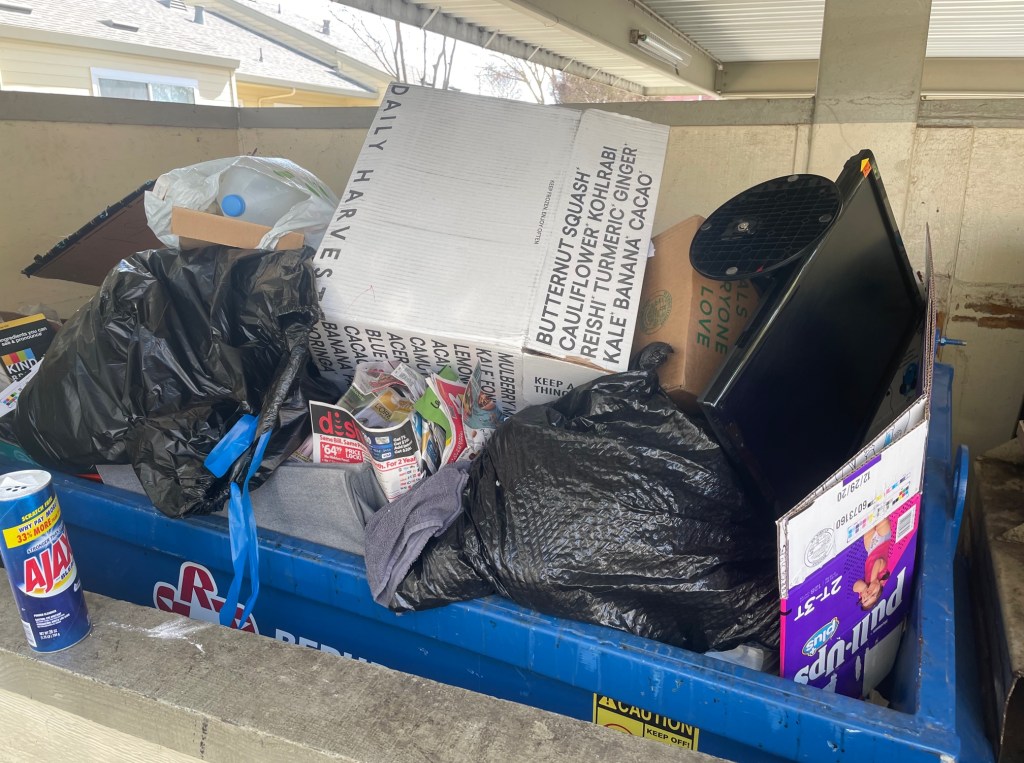
      A big contributor to failed recycling is too much disposables and not enough people doing it right. Apartment complex recycle bin picture by Jen Thilman.

      Last week I talked about the high cost of plastics, like the health damages they cause as a fossil fuel based product. And I talked about the huge opportunities for economic growth and jobs in the coming reuse economy. 

      So how do we, as individuals, support a transition away from disposable plastics into this circular economy of reuse? How do we do that when there’s so much disposable crap, aka packaging, in the world? 

      One step at a time.

      Start picking up some reuse habits today.
      Soon you’ll find it easy to do more.

      Here are some of my favorite ways to reuse items that might otherwise end up in the trash or recycling, and reduce our impact on the environment.

      1. Reuse plastic containers, food baggies, and wraps.
        • Food tubs, like for cottage cheese, have tight-fitting lids and are great for storing leftovers in the fridge. Note: it’s not healthy to freeze food in these. 
          • Take them with you when you eat out to carry home your leftovers.
          • Store dry goods and small items, like nails or buttons. 
          • Keep an open one in the back of your fridge with old coffee grounds in it to absorb odors.
          • Use masking tape to label them so you can peal it off and easily change it when you keep reusing these.
             
        • Zip-close plastic bags can be washed and reused over and over.
          • When I learned about reusable food storage bags I decided I would buy some once I finished my current box of disposable ones. That was over a year ago and I still have a few left because I wash and reuse them for as long as I can. I will be buying reusable ones soon.
        • Plastic food wraps are strong enough to be washed a few times unless they’ve been used on greesy foods which make them difficult to clean.
          • After you wash and dry them, use a butter tub to store your pieces of plastic wrap for reuse.
          • Look into reusable food wraps like beeswax wraps or this DIY way to make wraps from old materials. A great use for those worn and torn clothing you can’t donate but shouldn’t put in the trash.
        • Look for crafts and DIY things you can make with milk jugs, bottles and other plastic containers you frequently buy.
          • Look to buy your regular items in reusable containers.
            • Explore Loop, a reuse program offering refillable containers in stores.
      2. Get into gardening. Growing plants reduces carbon output and your impact on the planet. Growing your own food improves your health. Add composting to reuse food waste.
        • Compost to provide healthy nutrients for your plants and reduce methane gas, a seriously bad greenhouse gas.
          • If you don’t have a yard for outdoor composting, there are portable systems that fit perfectly for apartment life. 
          • Food waste in landfills is one of the biggest emitters of methane gas. But it can be avoided if we compost and reuse the organic materials.
        • Having house plants is good for your health. Indoors and outdoors.
          • Some food like tomatoes and peppers can be grown in canisters on a patio or balcony. Look into growing a lettuce bowl.
          • Eating fresh produce direct from the plant is the best way to get the vitamins and nutrients it was meant to provide.
      3. Electronics have to be disposed of correctly to reuse the materials that otherwise have to be mined from the earth. 
        • Shortages of components, like computer chips, happen all the time. 
          • These could be avoided if the raw materials in electronics were being recaptured and used to make new.
          • Always recycle used electronics at e-waste events. You may be able to sell or donate working electronics.
      4. Buy used clothing and household items to reuse what’s already been made. When you need something browse thrift stores and yard sales. It also gives you time to rethink whether you need to spend money on that item.
        • I’ve bought clothes at thrift stores with the original price tag still on them.
          • Online reuse and thrift stores are becoming popular and a great way to change up your wardrobe.
        • I’ve been wanting to get a blender. Browsing Goodwill recently I found a glass Black and Decker one for $5 and it works great. Chaching! People get rid of the best stuff.
           
      5. Because it’s heavy and comes in different colors, glass can be difficult to recycle. 
        • Stick to aluminum cans for beverages.
          • Aluminum has one of the highest recycle rates and can be recycled over and over.
        • Look for refill programs in your area.
           
          • There are regions around the world making this work, like in Germany. In the US, some states have pilot programs.
          • Watch for and support reuse programs in your community. We all need programs like this one in Seattle, WA.
        • Instead of trying to recycle things like pickle jars, reuse them around the house.
           
          • Wide-mouth jars can make great planters.
          • Use them for food storage.
          • Mix things in them, like paints or baking mix.
             
            • Fill a big jar with cake mix and the ingredients, have older kids shake it up to mix it. Baking fun for the whole family.

      Start working on these reuse actions today, or find more online. There are tons of resources and ideas out there. Then keep adding new reuse habits every week or so.

      Why It’s Important

      I talk a lot about habits. That because, when it comes to the environment, good habits can and will save us. I’m a fan of James Clear, author of Atomic Habits. Sign up for his free emails and read his books. They can help you build good habits and make reuse a part of your life. 

      If we build reuse habits now we will immediately reduce our individual impact on the environment.

      • We reduce the amount of plastics we generate.
      • We reduce our carbon output by growing plants.
      • We live healthier growing our own food, reducing food waste and transportation emissions.
      • We save money when we buy used items.

      Eventually your neighbors might notice when you take less trash and recycling to the curb. Your friends will be inspired by the reusable dishware you use when you entertain. People may notice and you will make an even bigger difference when they follow your lead and build reuse habits, too.

      With Much Gratitude

      That’s it for this bi-weekly issue of the 4Rs.

      If you like this post, please forward it to every earth-friendly human you know. 

      If you like this blog and find it helpful, please consider supporting my continued work here.

      Drop me a line anytime if you have questions or comments. I love hearing from you.

      Thank you for reading these tips and subscribing.

      Pat yourself on the back for doing your part. Remember, everything helps.

      We’ve got this!

      All my best,
      Jen
      jen.thilman@gmail.com 
      Sign-up to receive these weekly 4Rs posts

      By clicking submit you agree to share your email address with the site owner and Mailchimp to receive marketing, updates, and other emails from the site owner. Use the unsubscribe link in those emails to opt out at any time.

      Processing…
      Success! You're on the list.
      Whoops! There was an error and we couldn't process your subscription. Please reload the page and try again.
      No comments on 4Rs Tip for 08.27.2022 -Top 5 Tips to Build A Reuse Lifestyle
    • 4Rs Tip for 08.12.2022 -How A Reuse Economy Can Save Us

      August 12, 2022
      sustainability

      4Rs Tip for 08.12.2022 – How A Reuse Economy Can Save Us

      Zero waste is not only doable but will lead us into an economic boom. A new economy based on reuse. So what does that mean?

      • It means circularity of materials that comes with living responsibly and with zero waste. 
      • It happens when manufacturers are held responsible for how they make single-use products, and how we dispose of them so they can be reused or recycled. 
      • It means building an industry around reusable single-use packaging.

      A reuse economy means breaking the
      one-way road into the planet that our waste currently travels.

      Photo by cottonbro on Pexels.com

      The circularity of single-use items is the only way to prevent the growth of our waste. There are many ways this will be accomplished. Some have effectively been going on for a while but need to be expanded and improved upon.

      • Disposables have to be made with materials that can and will be used to make more. 
        • This can currently happen with single-use glass and metal but does not happen with most plastics because there are so many different types.
        • Mail-in programs for recycling disposable razors, toothbrushes, batteries, and similar items are now available. 
          • People need to be made aware of these and the programs need to be expanded on.
        • Extended Producer Responsibility (EPR) laws for disposables require manufacturers to bear the financial burden for the reuse and recycling of what they make. 
          • A number of countries have these laws in place for packaging.
          • Some states in the US have similar producer responsibility laws, but not many address packaging.
          • In the US, the expense of dealing with disposables is shouldered by taxpayers. 
            • Manufacturers have no incentive to make responsible packaging.
            • US municipalities spend more money on waste management than they do on schools, fire protection, libraries, and parks combined.
        • EPR laws exist in many countries and are in five Canadian provinces.
          • A number of US states are proposing EPR laws.
          • If you live in the US, tell your representatives to support EPR laws.
      • Refillable programs for beverage containers.
        • Bottle deposit laws are a critical first step toward reusing and refilling our beverage containers. We need to tell our politicians that we need more and better programs.
          • Only ten US states have these and less than half of those are really effective. Some states, like California, do not require that stores take back containers for beverages that people pay a deposit on. This makes it difficult for many people, like elderly and disabled individuals, to return these. 
        • Refillable beverage container programs have been successfully happening in countries like Germany for a while now. 
          • Progressive areas in the US, like Seattle, WA, are moving forward with reuse programs that can be a model for others. Visit ReuseSeattle.org to learn more.
      • Reusable carry-out containers and packaging are the way of the future.
        • Upstream Solutions is working with restaurants on pilot programs that make to-go containers circular.
        • They have a goal to develop zero waste onsite dining in restaurants.
        • Upstream is the organization behind The Reusies. An award show that recognizes the most significant efforts by individuals and companies toward building a reuse economy.
        • Learn more about how Upstream Solutions is moving us toward a reuse economy in this Waste 360 interview with the CEO, Matt Prindiville. 
      • Critical to reaching 100% reusable packaging is the development of Reusable Packaging System Design Standards. Check out the link and see what PR3 is doing to make this happen.

      Imagine if every material you bring into your home is turned into another item or reused when you’re done with it. Now think about how many jobs it can create those systems and make those durable reusable items.

      • Workers are needed to handle curbside collection and sorting of the materials.
         
      • Reusable carry-out containers save restaurants money which can equal more jobs and higher pay.
      • Infrastructure for these new processes needs to be built which equals more jobs.

      The goal is that eventually single-use packaging will all be reusable and recycling will no longer be needed. This will reduce the emissions associated with recycling. 

      • We need to push our governments and companies to make the reuse economy happen.
      • The bottom line, we need these things to happen now. 

      Why It’s Important

      You don’t need to have a Ph.D. to see that the economic and environmental benefits of a reuse economy can be huge.

      • A lot of workers are needed for this transition.
      • We have no choice as to the packaging our products come in, yet we have to pay the price for the damage it causes to our planet and our lives. How is that fair?

      The price of using plastics is a lot more than we may think. It goes beyond the purchase price. It is the cost of cleaning up our planet, and its in increased health care costs due to poor air quality and poisons in our food and water supply.

      With Much Gratitude

      That’s it for this bi-weekly issue of the 4Rs.

      If you like this post, please forward it to every earth-friendly human you know. 

      If you like this blog and find it helpful, please consider supporting my continued work here.

      Drop me a line anytime if you have questions or comments. I love hearing from you.

      Thank you for reading these tips and subscribing.

      Pat yourself on the back for doing your part. Remember, everything helps.

      We’ve got this!

      All my best,
      Jen
      jen.thilman@gmail.com 

      Sign-up to receive these weekly 4Rs posts

      By clicking submit you agree to share your email address with the site owner and Mailchimp to receive marketing, updates, and other emails from the site owner. Use the unsubscribe link in those emails to opt out at any time.

      Processing…
      Success! You're on the list.
      Whoops! There was an error and we couldn't process your subscription. Please reload the page and try again.
      No comments on 4Rs Tip for 08.12.2022 -How A Reuse Economy Can Save Us
    • 4Rs Tips for 07.29.2022 – Our Energy Transition Needs Your Support

      July 29, 2022
      sustainability

      4Rs Tip for 07.29.2022 – Our Energy Transition Needs Your Support

      It’s amazing to me that we have everything we need to make the transition to 100% renewable energy right now. We have the tech. We have the resources. We have the people, some who need the jobs the transition will create. 

      The only thing getting in our way is corporate influence and our governments. 

      “Oh, that’s all,” your sarcasm clear, “We can definitely beat them!”

      Photo by Markus Spiske on Pexels.com

      Our energy use is no joke, and it’s continuing to grow. The US is the fifth highest country in energy consumption. Yet a little over 20% of it was sourced from renewables in 2020.

      Photo by Vivint Solar on Pexels.com

      Be the Change – Vote Local and March

      We need to be tougher and smarter. I’m going to turn to an old cliche and say, this is the typical David and Goliath battle. So far, the results of this fight are inspiring.

      • Earlier this year in California, a bill was almost pushed through to tax rooftop solar. It would have cut energy savings for owners of solar panels by 57 – 71%. 
        • The expense to switch would be too great. Fewer people would add panels to their homes if incentives went away.
        • California citizens got wind of it in time to kick up a fuss. Many of us signed petitions and sent emails. People marched at the capital building in protest. The bill was tabled. Yay!

      This is one fight in a vast number of battles that need our support. We can’t let our guard down. 

      • Corporate interests and lobbyists sneak into local governments and push through laws that can prevent us from making the transition off fossil fuels. 

      It is no longer something we can leave to the next person. It’s going to take more than some of us. This is going to take all of us. 

      It’s time we all start fighting the fight. Make it a habit to take steps every day that support our transition.

      • Find a good source and stay informed about government and corporate actions that can negatively impact the environment.
        • In my state, I discovered the organization California Environmental Voters. This is how I learned about the proposed tax on solar and signed petitions to stop it.
      • Use tools that will help you fight for the climate.
        • Get the Climate Action Now app to send regular emails to your government representatives in minutes. Get it on the Apple or Google Play store.
          • I spend less than 15 minutes each morning sending pre-set messages to elected officials, companies, and environmental organizations. I customized them with my personal message once and the app remembered and inserts it into the template with each send. Brilliant! 
            • I bet my state reps are getting sick of hearing from me.
            • They should be sick of hearing from you, too. 
      • Find local actions or groups you can get involved with that are pushing governments and companies to do the right thing. To be environmentally responsible.
      • Make sure you know who your state and federal representatives are and get online to find out what they support. 
        • Call your reps or send them emails to let them know you are against continuing our reliance on fossil fuels. After all, they work for you!
      • Get your money out of the hands of banks and companies that invest it in fossil fuels.
        • We need to get better at paying attention to where our money goes. Not just how we spend it in stores or online, but where we invest it and keep it, too.

      We can not let corporate greed for profits today destroy the chances of the human race living beyond a few more generations. The science is clear that this is the current path we are on. We can no longer afford to sit back and let it happen. 

      Do a little something, anything, each day to help save the planet and get others to join you. Share with your family and neighbors this post and the good resources you find. With the natural disasters increasing I bet they have some interest in preventing climate change.

      Why It’s Important – Our Voices Need To Be Stronger Than Their Money

      While it’s sad we have to fight our elected officials to act on our behalf, I’m happy to play David in this battle against Goliath to protect our planet. Are you?

      With Much Gratitude

      That’s it for this issue. Remember, I now post bi-weekly so see you in two weeks. 

      If you like this post, please forward it to every earth-friendly human you know, and consider supporting my continued work here.

      Drop me a line anytime if you have questions or comments. I love hearing from you.

      Thank you for reading these tips and subscribing. Pat yourself on the back for doing your part.

      We’ve got this!

      Jen
      jen.thilman@gmail.com 

      Sign-up to receive these weekly 4Rs posts

      By clicking submit you agree to share your email address with the site owner and Mailchimp to receive marketing, updates, and other emails from the site owner. Use the unsubscribe link in those emails to opt out at any time.

      Processing…
      Success! You're on the list.
      Whoops! There was an error and we couldn't process your subscription. Please reload the page and try again.
      No comments on 4Rs Tips for 07.29.2022 – Our Energy Transition Needs Your Support
    • 4Rs Tips for 07.15.2022 – Best Ways to Take Action

      July 15, 2022
      sustainability

      4Rs Tip for 07.15.2022 – Best Ways to Take Action

      New Schedule – 4Rs is Going Bi-Weekly

      I’ve been writing this weekly blog now for over six months. While it’s one of the most fulfilling things I spend time on, I need to make time for the work that keeps the lights on. 

      With that said, I am moving the 4Rs to a bi-weekly blog post. I hope you will continue to read my posts every other week and use them to keep making changes that will help save our planet.

      Human impact got us in this situation
      and is the only thing that can get us out.
      Take action TODAY!

      Photo by Markus Spiske on Pexels.com

      Fight Overwhelm – Pick Consistent Actions and Take Charge

      It’s easy to get overwhelmed by the climate crisis and all the work that’s in front of us. I know, I feel it every day. But reality is knocking on our door in the form of severe weather, climate refugees, and our failing health.

      What our planet needs is for us to act!

      Pick two actions you can do regularly to help our planet and the human race survive.

      • Learn how to find joy while taking climate action. Watch this 10-minute Ted Talk from climate activist and marine biologist, Dr. Ayana Elizabeth Johnson.
      • Work to reduce your plastic consumption. Most plastics belong in your trash, not in recycling. Actively pay attention to how much you throw out every day. These resources can help.
        • It’s not too late to join the Plastic Free July campaign.
        • Learn about the 7 Global Efforts for Plastic Legislation.
        • In the US, send a letter to Congress telling them to support the Break Free from Plastic Pollution Act.
        • Sign and support the Global Plastics Treaty.
      • Use your t.v. to educate you and your community. Watch documentaries and videos that reveal the seriousness of the situation; share them with friends and family.
        • My sister recently turned me onto the documentary, “Eating our way to extinction.” The film reveals the reality of what our eating habits are doing to the planet and our bodies. Watch it on Prime. It will make you rethink how you eat. It did for me.
        • Watch this video from National Geographic – The Water Crisis. Learn the severity of the problem and how you can help save water, one of our most precious resources.
        • One of my favorite sources is PBS videos on climate change. Always very informative and eye-opening.
        • Practice minimalism. 
          • Learn from Ronald L. Banks how to buy and live on less.
          • Follow Earth911 Media podcasts to stay current on climate issues.
          • Check out videos from these guys, The Minimalists. You will learn how to reduce buying stuff and your impact on the planet.
      • Get the Climate Action Now app on Apple or Google Play store. It makes it easy to take daily actions and send emails. I send five to ten emails a day to my state and federal representatives. It takes no more than 15 minutes. I love it! 
      • Make sure you know who your state and federal representatives are and get online to find out what they support. Call your reps or send them emails to let them know you are against continuing our reliance on fossil fuels. After all, they work for you!
        • Hint: You can use the Climate Action Now app to send regular emails to your government representatives in minutes.

      Why It’s Important – Don’t Live Like an Ostrich

      Sticking your head in the sand and not paying attention to our climate emergency won’t do you any good. You will be less prepared when fires or floods knock on your door and food shortages become a way of life.

      • Fire seasons are longer now, devastating more areas and increasing the loss of trees, and emitting excessive carbon emissions.
      • Floods dominated the 432 natural disasters in 2021, a jump from the 20-year average of 357, causing billions of dollars in damage and the loss of thousands of lives.
      • Nearly a million acres of farmland are on the verge of being shut down in California due to drought and water shortages. This will cause around 10,000 people in the US to become climate refugees, adding to the estimated 24 million already displaced globally by severe weather.

      If you haven’t yet felt the impact of fires, floods, and droughts you will, and a lot soon than you think.

      This quote from an article by EcoWatch brings home why I write this blog.

      “While to many the climate debate may seem remote from daily life, the small decisions that we all can make—how much water we use, the products we buy, how we vote—are personal and possible. And they become easier the more we are aware of the consequences.”

      Mother Earth needs our help! The more aware we are of the problem the better chance we have of averting the consequences of the human impact on our source of life.

      With Much Gratitude

      That’s it for today’s post. Please share these tips with every earth-friendly human you know. Mother Earth is counting on us!

      If you like this blog and find it helpful, please consider supporting my continued work here.

      Drop me a line anytime if you have questions or comments. I love hearing from you.

      Thank you for reading these tips and subscribing. Pat yourself on the back for doing your part. Remember, everything helps.

      You got this!

      Jen
      jen.thilman@gmail.com 

      Sign-up to receive these weekly 4Rs posts

      By clicking submit you agree to share your email address with the site owner and Mailchimp to receive marketing, updates, and other emails from the site owner. Use the unsubscribe link in those emails to opt out at any time.

      Processing…
      Success! You're on the list.
      Whoops! There was an error and we couldn't process your subscription. Please reload the page and try again.
      No comments on 4Rs Tips for 07.15.2022 – Best Ways to Take Action
    • 4Rs Tips for 07.08.2022 – A Fight to Control Our Ecological Impact

      July 9, 2022
      sustainability

      4Rs Tip for 07.08.2022 – A Fight to Control Our Ecological Impact

      Our Impact on Mother Earth is Not Out of Our Control

      One of the biggest challenges we face is getting our carbon emissions under control. This is a huge part of the human ecological footprint. Why not carbon footprint? Because our impact is from more than carbon emissions, and it’s my way of protesting corporate manipulation.

      They’ve been getting away with it for far too long

      Photo by Chris LeBoutillier on Pexels.com

      One of our biggest obstacles is the fossil fuel industry and the power they have over governments and the media.

      Smoke and Mirrors

      They’ve been manipulating how we buy and, yes, even how we vote for far too long. When we protest about the damage caused by fossil fuels, the industry distracts us by coining terms like carbon footprint. This expression was created as propaganda “to shift responsibility of climate change-causing pollution away from the corporations and institutions that created a society where carbon emissions are unavoidable and onto personal lifestyle choices.” 

      They’ve manipulated us into an era where we practically have no choice but to buy from these big polluters that created the mess in the first place.

      Similar to the Keep America Beautiful campaign that was created to make us believe that if we put our trash in the right place our waste would no longer be a problem. It was funded by beverage and bottling companies to keep us buying disposable containers and plastics made from fossil fuels.

      100 companies are responsible for over 70% of emissions

      Research has shown that the top producers of fossil fuels are the biggest polluters. They do what they can to keep us from knowing how they perpetuate our climate crisis so we keep giving them craploads of money to do it. 

      Our eco-footprint is mostly driven by who we give our money to through spending and investments, and a lot of that happens with our tax dollars. Government subsidies to fossil fuel companies totaled trillions of dollars just a few years ago when the US was under a profit-driven regime. Fortunately, we’re seeing a shift in this irresponsible government spending of our tax dollars.

      • In the US, taxpayer dollars subsidize the fossil fuel industry to the tune of over 20 billion a year, and over 6 billion of that comes from state tax dollars. 
      • An analysis by the International Monetary Fund (IMF) showed that in 2020 the fossil fuel industry made 11 million dollars every minute from government subsidies.
      • One study by the IMF in 2017 showed that the US spent 10 times more on the fossil fuel industry than it did on education. If you think about it, this leads to the dumbing of America so people will believe the lies of big polluters.

      How can we fight big business? With our voices and our wallets.

      We need to fight laws that keep us dependent on fossil fuels by speaking up and telling our elected officials enough is enough.

      • Vote for local laws and the representatives that will protect your community from plastics and policies that benefit the fossil fuel industry. Without our voices, fossil fuel companies and big corporations write the rules to fit their needs and increase profits.
        • Right under our noses fossil fuel lobbyists went into US states and pushed through bans on restricting the use of plastics in as many as 18 states. These bans on plastic bans make it even harder to restrict the mass amounts of plastic invading your community. 
        • In California, energy companies found rooftop solar cutting into their profits so they tried to push through a tax on owners of solar panels. Many people in the state protested with calls and emails (I was one of them) and prevented it from happening, for now. We can’t let up. We need to continue to fight these laws that keep us tied to fossil fuels.
        • Find informative resources in your state and municipality to know what is happening in your community to fight corporate polluters. I subscribe to my state Department of Justice newsletter that tells me what actions are being taken to protect me and my family.
      • The internet provides us the resources to learn about this kind of legislation in our communities and states. 
        • Make sure you know who your state and federal representatives are and get online to find out what they support. Call your reps or send them emails to let them know you are against continuing our reliance on fossil fuels. After all, they work for you!
        • Get the Climate Action Now app that makes it easy for you to make those calls or send emails. I send about ten emails a day to my state and federal representatives and it takes no more than 15 minutes a day. 

      Come on, you can’t tell me you don’t have 15 minutes to spare to save our planet. How are you gonna explain that to your kids?

      And, we can take action to avoid buying from corporate polluters.

      • Drive an electric car or drive less – if you can’t afford to switch up your vehicle right now work on other ways to reduce your gas use. Look for alternatives like:
        • Public transportation
        • Walking to the store
        • Take a train or bus on your next trip
      • Don’t buy plastics – actively working to avoid them; it’s challenging but doable. Pay attention to what you buy and look for ways to shift those purchases to buy from eco-friendly companies that use biodegradable or reduced packaging.
        • Buying used goods eliminates more packaging in our world. There are enough clothes in the world that no one has to buy new, ever! I’m just saying.
      • Reduce online orders to avoid transportation emissions – become aware of the consequences of your online shopping. Watch this video on the true cost of Prime Day.
      • Buy long-lasting durable products that you will want to hang onto for a long time. Profit-hungry corporations hate this.

      A great quote I recently read:

      “When you buy something cheap and bad, the best you’re going to feel about it is when you buy it. When you buy something expensive and good, the worst you’re going to feel about it is when you buy it.”

      Why It’s Important

      Someone asked me once why what’s happening now to our climate is any different than the natural change that would occur anyway? At the time, my best response was to say that human activities accelerate climate change. I found out later that wasn’t the right answer. 

      I love these questions because they help me discover the truth about this crisis. It’s not that human activities have accelerated a change in climate, we’ve disrupted it.

      The air and ocean currents that support life on our planet are broken. They no longer work the way they are supposed to. This is why we see unusual weather patterns and heat waves in the Antarctic that are unnatural. 

      This quote from an article by EcoWatch brings home why I write this blog.

      “While to many the climate debate may seem remote from daily life, the small decisions that we all can make—how much water we use, the products we buy, how we vote—are personal and possible. And they become easier the more we are aware of the consequences.”

      Mother Earth needs our help! The more aware we are of the problem the better chance we have of averting the consequences of the human impact on our source of life.

      Mourning the Loss of Freedom and Protections in My Country

      The decisions made by the US Supreme Court over the past few weeks scream clearly that they are not concerned with protecting my health or my rights as a human.

      After the devastating blow to our right to choose what happens to our bodies, they stripped the Environmental Protection Agency (EPA) of its power to regulate power plant emissions. It’s mind-numbing to think the EPA is there to protect our environment, yet has no powers to do that. 

      These decisions strike a blow to human rights and the health of our citizens. I can think of no better reason to step up our fight for the planet and our future.

      Ways You Can Make A Difference

      It’s not taboo to talk climate. 

      Share these videos that might open someone’s eyes or help them see what they can do.

      • This 10-minute Ted Talk from climate activist and marine biologist, Dr. Ayana Elizabeth Johnson helps us understand how important it is to act now and how to find joy in saving the planet. Please watch and share.
      • The Film4Climate short film winner in 2016, Three Seconds is only 4 minutes long and well worth your time. Check it out.

      With Much Gratitude

      That’s it for this week. If you like this post, please forward it to every earth-friendly human you know. 

      If you like this blog and find it helpful, please consider supporting my continued work here.

      Drop me a line anytime if you have questions or comments. I love hearing from you.

      Thank you for reading these tips and subscribing. Pat yourself on the back for doing your part. Remember, everything helps.

      You got this!

      Jen
      jen.thilman@gmail.com 

      Sign-up to receive these weekly 4Rs posts

      By clicking submit you agree to share your email address with the site owner and Mailchimp to receive marketing, updates, and other emails from the site owner. Use the unsubscribe link in those emails to opt out at any time.

      Processing…
      Success! You're on the list.
      Whoops! There was an error and we couldn't process your subscription. Please reload the page and try again.
      No comments on 4Rs Tips for 07.08.2022 – A Fight to Control Our Ecological Impact
    • 4Rs Tips for 07.01.2022 – Water Conservation: Even More Important Now

      July 1, 2022
      sustainability

      4Rs Tip for 07.01.2022 – Water Conservation: Even More Important Now

      Ways to Conserve Water, Our Most Precious Resource

      But first, I want to talk about my favorite climate activist and marine biologist, Dr. Ayana Elizabeth Johnson. Co-founder of Urban Ocean Lab, she’s also a writer, climate policy expert, and presenter of this inspirational Ted Talk. It’s only 10 minutes long and I hope it is 10 minutes that will change your life. It did mine. Please watch and share. For the sake of our planet.

      Now, about water…

      One Drop Saved is More Than None

      Photo by Pixabay on Pexels.com

      What sucks is that a lot of us have been doing our part to conserve water, when most water use is by manufacturing and agriculture. But this shouldn’t be a reason not to save water, it should be a reason to speak out and force big businesses to change. You can use your wallet for this, too. 

      Do the research and find companies that are working on reducing water waste. Buy from these companies, once you’re sure they’re making efforts to conserve. 

      No matter what, every drop of water we can save makes a difference to the lives of future generations and how they live. Here are some ways to do that.

      • Turn off the faucet while you brush your teeth or shave.
      • Make sure your faucets are turned off all the way. Fix drips right away. You would be amazed how much water is wasted from a drip.
      • Take 5 minutes showers and take them less often. You only need to shower every day if you stink, right?
      • When washing your hands, turn off the tap while you scrub and practice turning faucets on lightly with a low stream.
      • Flush less – there’s no reason to flush every time you pee.
        Remember, if it’s yellow leave it mellow, if it’s brown flush it down. 
        • Each flush in a standard toilet uses 5 -7 gallons of water. 
        • Consider putting in a low-flow toilet when you remodel or build a home. It reduces water use to less than 2 gallons per flush.
      • Reduce how often you water your lawn – it may like it greener looking, but looks aren’t important right now. 
        • We need that water to grow food.

      Needs Vs. Wants – an important consideration
      when we’re fighting for our lives

      • Wash your car less and look for a car wash that uses recycled water. Or, wash your own car and control how much water is used. 
        • Have a nozzle on your hose so you can easily shut off the water when not rinsing.
      • Only wash your clothes when they’re dirty or stinky. This saves water and reduces microplastic in our water system unless you wear only organic materials. If so, I say “thank you!”
      • Cut out food waste. We need water to grow food and with one-third of our food being wasted every day, we could save a lot of water if this was eliminated.
      • When boiling food, only use enough water to cover it. The rest is wasted water.
      • Need a drink of water? Don’t run the faucet waiting for it to get cold. Keep a jug of water in the frig, or a water filter pitcher so you get the healthiest water for you and your family.
      • Water house plants with the water you used to boil eggs or noodles, after the water has cooled, of course. Why pour that water down the drain? And, anything organic in it is nutrients for plants.
      • When you hand wash anything, clothes, or dishes, use a bucket. Don’t run the faucet.

      Visit Save Our Water for more on these tips and learn how much water you can save by doing some of them.

      Kids Need to Know Why It’s Important

      Help your kids to understand why you yell when they leave a faucet running. There are great resources online. Tell them NASA wants to help them understand and visit this site with them.

      • NASA has a cool section on their website called Climate Kids. It covers everything climate and includes a page to learn about water and why it’s important. Explore Climate Kids with your young readers. Help them read, learn, and play games that will help them understand climate change.
      • Check out this article on Teaching Children the Importance of Water for ideas and experiments you can do with kids to show them how important water is to their bodies.
      • KC Edventures has this great article full of resources, games, and activities to help kids learn water conservation.
      • Start teaching them at a young age how to care for the planet. Toddle has these great tips for games and activities you can do with toddlers.

      There are many lessons our children need to learn about caring for the planet. Learning about water and how important it is not to waste it, is one of the easiest ones to teach them.

      WATER FACTS

      • All living things on earth require water. Without it, we wouldn’t survive.
        • Babies are almost 80% water, and adults are 50 – 60%
      • Just 3.5% of earth’s water is freshwater that we can drink, and almost 70% of that is found in ice and glaciers.

      An article by EcoWatch struck me with this powerful statement:

      “While to many the climate debate may seem remote from daily life, the small decisions that we all can make—how much water we use, the products we buy, how we vote—are personal and possible. And they become easier the more we are aware of the consequences.”

      Why It’s Important

      We mostly get our water from underground aquifers, lakes, and rivers. And, we capture it in reservoirs, which are depleting from hotter temperatures and less rain. But it is limited and we don’t have as much as we might think.

      There’ve been a lot of stories lately about reservoirs and water sources drying up. And like any of our precious resources, we don’t have unlimited amounts. Actions to protect groundwater are what caused restrictions in California and will potentially shut down about a million acres of farmland.

      • I recently read about anticipated climate refugees in my home county in California, as tens of thousands of farmworkers will lose their jobs when farms shut down. Water shortages and restrictions will cause this if dryer and hotter days continue.
      • My county is also sinking due to the depletion of groundwater under it. Since the start of industrialization, the county I live in has sunk 10 feet!

      There’s a lot of food grown in the central valley of California. It’s scary to think what will happen if they don’t figure out a solution to our water shortages.

      It’s almost reached the point where we have to either give up fresh produce or stop using so much water for other things. We can no longer have it both ways.

      Mourning the Loss of Freedom and Protections in My Country

      The decisions made by the US Supreme Court over the past few weeks scream clearly that they are not concerned with protecting my health or my rights as a human.

      After last week’s devastating blow to our rights to choose what happens to our bodies, this week they stripped the Environmental Protection Agency of its power to regulate power plant emissions. It’s mind-numbing to think this agency is there to protect our environment, yet has no powers to do that. 

      These decisions strike a blow to human rights and the health of our citizens. I can think of no better reason to step up our fight for the planet and our future. 

      I have finally realized why global warming became so political. We no longer have governments that represent what’s in the best interests of the people and our health. At least in the US, it no longer feels like we have a government for the people, by the people.

      Time to Take Action

      Visit Save Our Water and take their quiz to see how much you know about water waste, then check out their resources and see what you can do to help in your home and community.

      It’s not taboo to talk about climate. Share these videos that might open someone’s eyes or help them see what they can do.

      • The Film4Climate short film winner in 2016, Three Seconds is only 4 minutes long and well worth your time. Give it a watch! 
      • Don’t forget to check out Dr. Johnsons Ted Talk. It will help you see how you can help Mother Earth.

      With Much Gratitude

      That’s it for this week. If you like this post, please forward it to every earth-friendly human you know. 

      If you like this blog and find it helpful, please consider supporting my continued work here.

      Drop me a line anytime if you have questions or comments. I love hearing from you.

      Thank you for reading these tips and subscribing. Pat yourself on the back for doing your part. Remember, everything helps.

      You got this!

      Jen
      jen.thilman@gmail.com 

      Sign-up to receive these weekly 4Rs posts

      By clicking submit you agree to share your email address with the site owner and Mailchimp to receive marketing, updates, and other emails from the site owner. Use the unsubscribe link in those emails to opt out at any time.

      Processing…
      Success! You're on the list.
      Whoops! There was an error and we couldn't process your subscription. Please reload the page and try again.
      No comments on 4Rs Tips for 07.01.2022 – Water Conservation: Even More Important Now
    • 4Rs Tips for 6.24.2022 – The Dirt on Dirt: Our Lives Depend on Healthy Soil

      June 24, 2022
      sustainability

      4Rs Tips for 6.24.2022 – The Dirt on Dirt: Our Lives Depend on Healthy Soil

      Healthy Soil is More Important Than You May Realize

      Healthy dirt is required to grow our food, and yet the majority of our soil has been depleted of the nutrients it needs to do that. Once soil loses all its critical microorganisms, it becomes sand.

      Healthy soil feeds life on the planet

      Photo by Lisa on Pexels.com

      We need healthy soil in our future

      Scientists are telling us that, at the rate our soil is degrading, by 2045 the amount of food we are able to grow will have decreased by 40%. Yet we will have 15% more people on the planet. Research has found that we have around 45 – 50 years of agricultural soil left.

      Anyone who plants things wants abundant growth; a big crop. From the big companies and farms, down to the backyard gardeners. That’s the goal. Not knowing better we’ve been using human-made solutions in order to accomplish this, and they harmed our dirt. 

      It’s time to help our soil heal. Here are some things to know and tips for what you can do in your little patch of the world.

      • Buy organic – Organic farming practices support healthy dirt.
      • Check out How to Grow Houseplants Sustainably. The more plants you grow the more you reduce your carbon footprint. Even houseplants.
      • Composting – not only reduces food waste but also feeds your dirt with the organic matter it needs. Find other ways to do that here.
      • Never till your garden – I know, I know. It’s a practice my parents and even their parents did. They just didn’t know better. It disturbs the microorganisms and releases CO2 that we’re trying to keep in the soil that naturally sequesters it.
      • Always cover your soil with mulch or other organic materials, like leaves. This helps keep good organisms and CO2 in the ground.
      • Don’t EVER use fertilizers – Not on your garden, your flower beds, or your grass. They kill the good organisms.
      • Don’t use chemicals like pesticides and herbicides – There are natural ways to repel bugs and weeds, and healthy soil will have the organisms to fight these. We just need to return it to its healthy state.
        • Diatomaceous Earth is a natural powder I’ve used that keeps bugs off plants. 
        • Check out these ideas for other natural pesticides.
        • There are natural home remedies you can use for weed killers.
      • Diseased crops mean diseased soil. Keep working on building healthy dirt by giving it the nutrients it needs, not chemicals that make it weaker.
      • Use cover crops. If you have a farm or a lot of planting space, read up on regenerative gardening and why it’s important to grow cover crops.

      We have to get big Ag to change. Your voice can do that.

      The bad news is it’s going to take a few years, a few harvests, to get the soil back to normal health. But first, we have to get everyone on board.

      • We need laws that regulate the use of soil – While many countries, including the US and the EU, have regulations for farming and agriculture, they mostly address chemicals and how to avoid contamination. 
        • Those giant machines farmers and big ag use are damaging the soil.
        • We need to push governments to enact stronger legislation about how the soil is used, in order to protect it from abuse.
      • We’ve reached a point where policy change is the only thing that will save us.
        • We can’t wait for big ag to voluntarily make changes to how they do business.
        • Smaller farmers may not be able to afford a switch from old methods. We need incentives to help them do it.
      • Activate to care for the soil. The number one thing our soil needs right now is your voice. 
        • Visit Save Soil and watch the 6-minute video. Then join the Save Soil movement at Conscious Planet where you can find resources like this toolkit with ways to spread the word over social media and other mediums.

      The health of our dirt is in our hands.

      Why It’s Important

      There are so many reasons why we need to fight for healthy soil. 

      Though our soil is a natural living organism and should contain millions of microorganisms to feed and nourish us, this is no longer the case. 

      The soil is supposed to provide complex nutrients for our bodies. Research is showing that humans are now deficient in major vitamins, like A, C, K, E, and Iron, because there isn’t enough in our food. This is more than poor eating habits. 

      Even if you eat whole foods, fruits, and vegetables, you can no longer get the vitamins and nutrients your body needs because the soil can no longer deliver them.

      Food crisis is a driving force behind war and revolution. The majority of wars have been fought over food and resources. Our current practices are leading us to a food shortage. This will lead to instability and death, not just from starvation.

      “There is no peace if there is no food. It’s as simple as that.”
      Dr. Rattan Lal, Professor of Soil Science, Ohio State University, World Food Prize Awardee 2020

      Watch this video to learn more about how life depends on soil and why focusing on the health of our soil should be our number one priority. And share it with all the planet-friendly people you know.

      Healing our soil so it captures carbon again is the quickest way to reduce global warming.

      Every living thing is carbon-based, including soil. The more healthy soil we have on the planet the more it can work as a natural way to sequester carbon where it belongs, in living things.

      And if that’s not enough to convince us to change, take a look at our anticipated future food supply. This article from EcoWatch tells us the foods we’ll be eating in 30 years, from algae to insects, unless we change right now to:

      • Sustainable farming,
      • Resource conservation,
      • Eating locally and seasonally, and 
      • Eating plant-based as much as possible.

      Time to Take Action

      If you only have time to do one thing for the planet, outside of practicing 4Rs in your home, learn more about how to save the soil. Our lives literally depend on it. 

      This Save Soil page has a link to the save soil movement by Conscious Planet. Start there to find ways to get involved and how to talk about the issue. For an update on Sadhguru and his journey to save soil check out this recent article.

      If you haven’t yet, please consider downloading the free Climate Action Now app to your phone. Turn on notifications and the app will remind you to take your five actions each day. I did mine this morning and it took ten minutes! Come on, don’t tell me you can’t spare ten minutes for the planet?

      Don’t forget to pledge to pick six lifestyle changes and start working on making them happen. Some are easier than others. Research says that if we each picked six lifestyle changes we can change the path we’re on.

      Share this video which might open someone’s eyes to the impact of humans on our planet. Three Seconds was the Film4Climate short film winner in 2016. Give it a watch. It’s only 4 minutes long and well worth your time and sharing.

      And, the US EPA has this page with more ideas of what you can do to help fight climate change.

      With Much Gratitude

      That’s it for this week. If you like this post, please forward it to every earth-friendly human you know. 

      If you like this blog and find it helpful, please consider supporting my continued work here.

      Drop me a line anytime if you have questions or comments. I love hearing from you.

      Thank you for reading these tips and subscribing. Pat yourself on the back for doing your part. Remember, every little bit helps. 

      You got this!

      Jen
      jen.thilman@gmail.com 

      Sign-up to receive these weekly 4Rs posts

      By clicking submit you agree to share your email address with the site owner and Mailchimp to receive marketing, updates, and other emails from the site owner. Use the unsubscribe link in those emails to opt out at any time.

      Processing…
      Success! You're on the list.
      Whoops! There was an error and we couldn't process your subscription. Please reload the page and try again.
      No comments on 4Rs Tips for 6.24.2022 – The Dirt on Dirt: Our Lives Depend on Healthy Soil
    • 4Rs Tips for 6.17.2022 – Climate Action Is Easier Than Ever

      June 17, 2022
      sustainability

      4Rs Tips for 6.3.2022 – Climate Action Is Easier Than Ever

      Climate Reality Is Our Reality

      Hello, my planet-loving friends. Did you miss me last week? 

      I just returned from Climate Reality Leadership Corps training in Las Vegas, Nevada. And, man, was it hot. Not only the training but the weather, too. Vegas hit record highs for this time of year.

      I had the lofty goal of attending training and writing this blog. But in the end, it was a good thing I left my laptop power cord at home. I had a lot to absorb. 

      The training was exhilarating, inspirational, and overwhelming, all at the same time. I had to gather my thoughts before I could share the excitement with you.

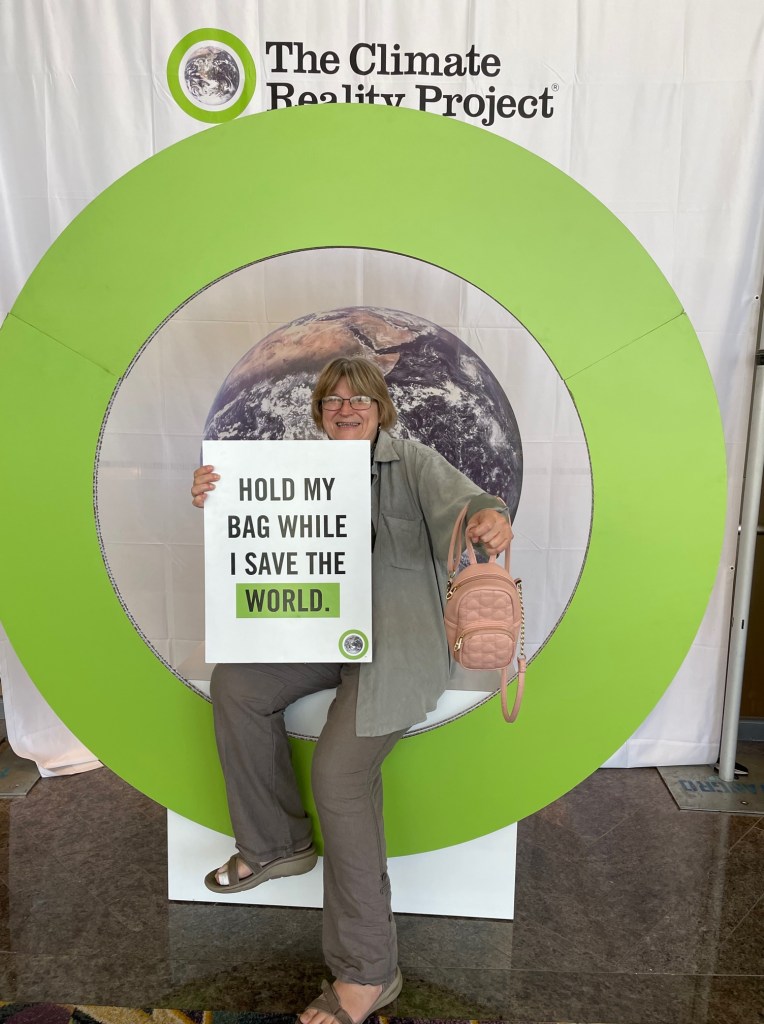
      Jen Thilman: “Hold my bag while I save the world.”

      2 Big Things I Learned in Vegas

      1. Human activities have not only accelerated the changing of our climate but have disrupted our natural climate balance. 
        • When I was in grade school I remember learning about currents – air currents and ocean currents – and how our ecosystem depends on these currents to support life as we know it. These currents are no longer stable, which is a simple way to understand and explain to others why fighting climate change is a fight for our lives.
        • These disruptions are evident in unusual weather like ice storms in Texas, severe flooding around the globe, and dangerous heatwaves just this month. It’s still spring, isn’t it?
      2. It doesn’t take a lot for us to change the path we’re on. I learned how easy it is for us to find our voice and fight for the planet. Not only through our actions and interactions with each other, but with some simple steps and tools that can move us in the right direction.
        • The Climate Action Now app was developed with the support of the Climate Reality Project. It’s an easy way to take daily actions like signing petitions, sending messages to your government representatives, or learning about and sharing actions that are happening to fight climate change. In a few minutes a day, you can take five actions with the app. Earn points toward planting a tree in a protected forest.
        • Take the Jump and commit to these six key lifestyle changes that will make a huge difference. Based on research from three leading institutes, these six actions by individuals and governments will be the most impactful. 
          • From flying less to buying fewer new clothes, you’ll find something to get started on. Check out the actions. You might find some are easy to do. Start with those. The better you do, the better you’ll feel about it. Once you’ve made a few changes it will be easier to tackle the tougher ones.
          • The sixth one, Change the System, can be done by using the Climate Action Now app which supports your activism.
        • Find organizations to follow and support. There’s a lot out there, so find ones that are taking action you’re interested in. Like fighting fossil fuel companies, protecting wild places, or cleaning up our oceans. 
          • Don’t try and support them all, you’ll get overwhelmed. Just pick two that are doing work you support and donate to them when you can. 
          • Sign up to receive their latest news. Many of them have newsletters that include petitions you can sign.
        • Continue adding Reduce and Reuse habits to your life. Remember, even small changes make a difference, so keep taking them. I’ll keep digging up more ways to help you do that with this 4Rs blog.
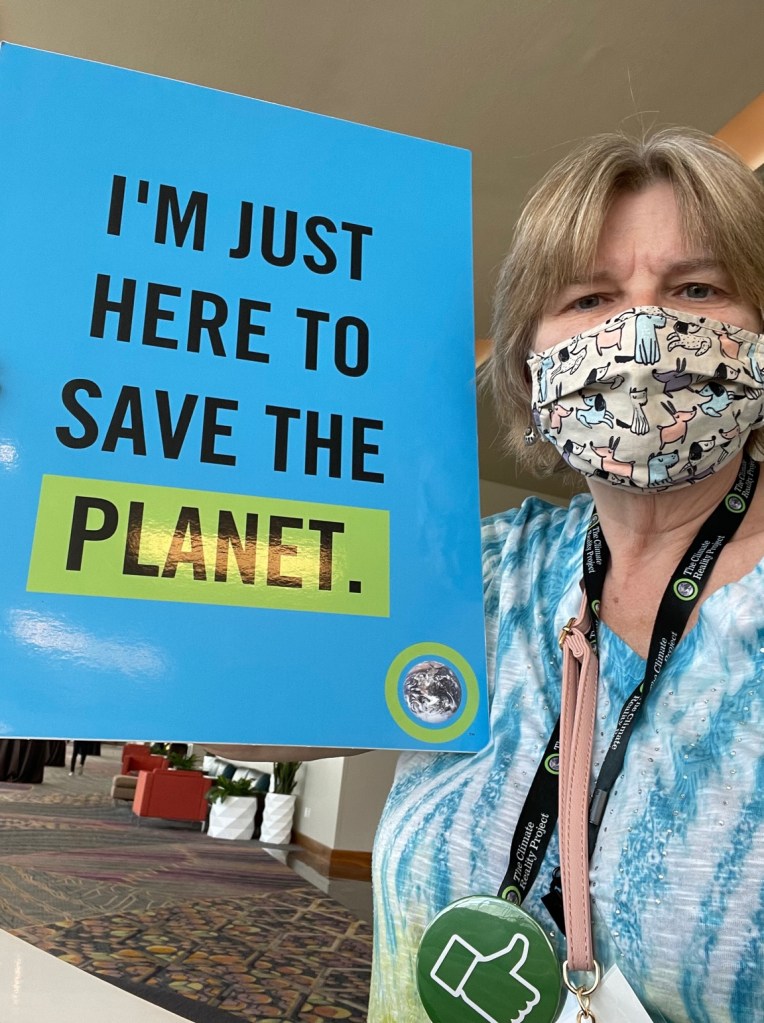
      Jen Thilman: “I’m just here to save the planet.”

      An October 2019 quote from Archbishop Desmond Tutu shared in the Las Vegas training:

      “Climate change is the apartheid of our time.”

      I recently had a conversation with my daughter about how to say “you’re welcome” in sign language. She grew up with deaf friends and a caregiver who is a deaf translator. They often spoke in American Sign Language. 

      My daughter asked if I knew my letters. Though I learned them when I was in scouts as a kid, I never had the chance to immerse myself in the language like she did. Years later, she still knows her letters and how to sign. I do not. The point is, when we immerse ourselves in a habit or practice (or language) we get better at it and it becomes part of who we are.

      It’s time to immerse ourselves in saving our planet.
      It’s time we become a driving force in helping

      Mother Earth heal.

      More Actions You Can Take

      Looking for other ideas and ways you can support the healing of our planet?

      • This weekend, in honor of Juneteenth and Father’s Day, join the Save Soil Walkathon. Click on the link to find an event near you.
      • Consider applying to attend a Climate Reality Leadership Corps training. You don’t need a lot of experience, just a will to help fight climate change. I encourage anyone who is willing and able to step up their fight for the planet to apply. It’s a global program, and they offer virtual training. Your level of involvement as a climate leader (or climate warrior as I have now been dubbed by a family member) is entirely up to how much time you can commit. A little or a lot, it all makes a difference. 

      I learned a lot in Las Vegas about where we are in this fight to save our planet and all the work we need to be doing right now. 

      Most importantly, I was overwhelmed by all the people, young and old, committed to fixing our climate problem. It was super exciting! Oh, and the bonus… I got to shake Al Gore’s hand 🙂

      Don’t Worry, Nobody’s Perfect

      Since I launched this blog in January, my goal was to write to you every week with things you can do to reduce, reuse, and help fight climate change. But sometimes things don’t always go as planned. And that’s okay! So I missed a week.

      We dust ourselves off and pick up where we left off. Let’s keep that in mind as we work to make the changes we need to make. Maybe you forgot your reusable bags when you went shopping this week. Forgive yourself, put a reminder on your phone for next time, and keep working on building that habit.

      I’m committed to helping you do it. I hope you’re committed to getting it done.

      Why It’s Important

      I constantly hear people say, “It’s big corporations who are the polluters. They’re the ones who need to change. They created the problem.” True, but…

      • This is why we need to be heard. We need to make sure our governments are setting down laws that will stop corporate polluters. 
      • And, we need to recognize that we give those corporations our money to fund their activities. Addressing our buying habits is the best way to change that.

      Don’t forget one of my favorite quotes:

      “Never doubt that a small group of thoughtful committed citizens can change the world. Indeed, it is the only thing that ever has.”
      Margaret Mead (1901-1978), American cultural anthropologist

      With Much Gratitude

      That’s it for this week. If you like this post, please forward it to every earth-friendly human you know. 

      If you’re in a position to do so, please consider supporting my efforts and this blog.

      Drop me a line anytime if you have questions or comments. I love hearing from you.

      Thank you for reading these tips and subscribing. Pat yourself on the back for doing your part. Remember, everything you do to change to more planet-friendly habits makes a difference.

      You got this!

      Jen
      jen.thilman@gmail.com 

      Sign-up to receive these weekly 4Rs posts

      By clicking submit you agree to share your email address with the site owner and Mailchimp to receive marketing, updates, and other emails from the site owner. Use the unsubscribe link in those emails to opt out at any time.

      Processing…
      Success! You're on the list.
      Whoops! There was an error and we couldn't process your subscription. Please reload the page and try again.
      No comments on 4Rs Tips for 6.17.2022 – Climate Action Is Easier Than Ever
    Previous Page
    1 2 3 4
    Next Page

    Blog at WordPress.com.

    Jen Thilman

    Writer, Coach, and Planet Lover

    • Home
    • My Writing
    • How I Write
    • About Jen
     

    Loading Comments...